Introduction
The global pharmaceutical market is expanding rapidly, offering immense opportunities for exporters. However, entering and scaling in international markets comes with challenges such as regulatory compliance, high production costs, and maintaining consistent quality standards.
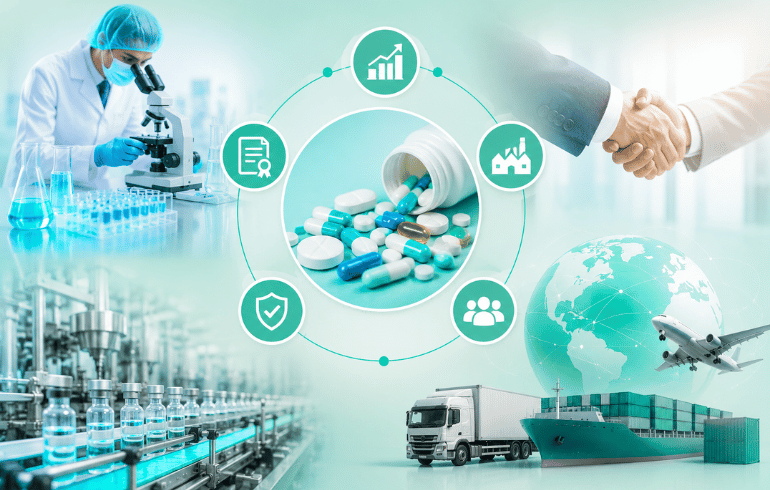
This is where third-party pharma manufacturing becomes a game-changing solution. Also known as contract manufacturing, this model allows exporters to outsource production to specialized manufacturers while focusing on branding, distribution, and global expansion.
In this detailed guide, we’ll explore the key benefits of third-party pharma manufacturing for exporters, why it’s the preferred business model in 2026, and how it can help you grow your pharma export business efficiently.
What is Third-Party Pharma Manufacturing?
Third-party pharma manufacturing is a business arrangement in which a pharmaceutical company hires a certified manufacturer to produce medicines under its brand name.
The exporter handles:
- Branding
- Marketing
- International sales
The manufacturer handles:
- Production
- Packaging
- Quality control
This model is widely used by exporters who want to scale quickly without investing in manufacturing facilities.
Why Exporters Prefer Third-Party Pharma Manufacturing
Exporting pharmaceuticals involves strict regulations, certifications, and cost management. Third-party manufacturing simplifies these complexities by offering ready infrastructure, compliance support, and high-quality production.
Top Benefits of Third-Party Pharma Manufacturing for Exporters
1. Low Investment, High Returns
Setting up a pharmaceutical manufacturing unit requires massive capital investment in:
- Machinery
- Skilled labor
- Quality testing labs
- Regulatory approvals
Third-party manufacturing eliminates these costs, allowing exporters to start with minimal investment and achieve higher profit margins.
2.Easy Entry into International Markets
Exporters must meet strict international standards such as:
- WHO-GMP
- ISO certifications
- Country-specific regulations
Third-party manufacturers already comply with these standards, making it easier for exporters to enter regulated markets like:
- USA
- Europe
- Africa
- Middle East
3. Focus on Core Business Activities
By outsourcing production, exporters can concentrate on:
- Building international client networks
- Marketing and branding
- Expanding distribution channels
This improves efficiency and accelerates business growth.
4. Access to High-Quality Manufacturing
Reputed third-party pharma manufacturers use:
- Advanced machinery
- Modern production techniques
- Strict quality control systems
This ensures consistent product quality, which is crucial for maintaining trust in global markets.
5. Wide Product Portfolio
Third-party manufacturers offer a broad range of products such as:
- Tablets
- Capsules
- Syrups
- Injections
- Herbal products
Exporters can easily expand their product portfolio without additional investment.
6. Scalability and Flexibility
Export demand can fluctuate depending on market conditions. Third-party manufacturing allows exporters to:
- Increase production during high demand
- Reduce production during slow periods
This flexibility helps in better inventory and cost management.
7. Faster Time-to-Market
Time is critical in the pharmaceutical export business. Third-party manufacturers have ready infrastructure and resources, enabling:
- Quick production
- Faster product launches
This gives exporters a competitive edge in international markets.
8. Reduced Operational Risk
Running a manufacturing unit involves risks such as:
- Equipment failure
- Labor issues
- Regulatory compliance
Third-party manufacturing transfers these risks to the manufacturer, allowing exporters to operate with greater stability.
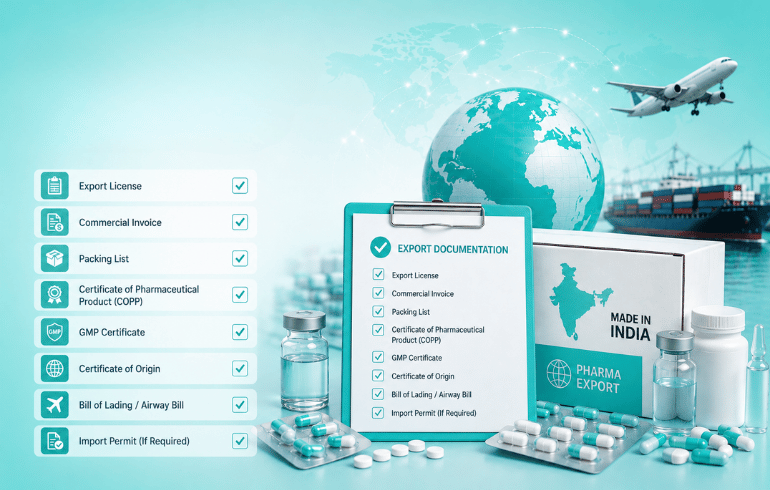
9. Regulatory Compliance Support
Exporting pharmaceuticals requires extensive documentation and compliance. Many third-party manufacturers provide:
- Product dossiers
- Regulatory documentation
- Export certifications
This simplifies the export process significantly.
10. Cost Efficiency in Bulk Production
Third-party manufacturers operate on a large scale, which reduces the cost per unit. Exporters benefit from:
- Economies of scale
- Competitive pricing
- Higher profit margins
11. Branding Opportunities
Exporters can sell products under their own brand name without owning a manufacturing unit. This helps in:
- Building brand identity globally
- Creating long-term customer loyalty
12. Access to Expert Knowledge
Third-party manufacturers have experienced professionals who understand:
- Market trends
- Regulatory changes
- Product development
Exporters benefit from this expertise without hiring their own team.
Why India is the Best Hub for Third-Party Pharma Manufacturing
India is known as the “Pharmacy of the World” and is a preferred destination for pharma exporters due to:
Cost Advantage
Manufacturing costs in India are significantly lower compared to Western countries.
Skilled Workforce
India has a large pool of qualified pharmacists, chemists, and technicians.
WHO-GMP Certified Facilities
Many Indian manufacturers comply with global standards.
Strong Export Network
India exports pharmaceuticals to over 200 countries.
How to Choose the Right Third-Party Pharma Manufacturer
To maximize benefits, exporters should select the right partner by considering:
1. Certifications
Ensure the manufacturer has:
- WHO-GMP
- ISO
- Export licenses
2. Product Range
Choose a manufacturer that offers a wide variety of products.
3. Quality Standards
Check their quality control processes and testing facilities.
4. Experience
Work with experienced manufacturers who have export expertise.
5. Pricing
Compare pricing to ensure competitive rates without compromising quality.
Future of Third-Party Pharma Manufacturing for Exporters
The demand for affordable medicines is increasing worldwide. Third-party manufacturing is expected to grow rapidly due to:
- Rising healthcare needs
- Increasing global trade
- Demand for cost-effective production
Exporters who adopt this model will have a strong advantage in the global market.
Why Choose Pharma Outsourcing in 2026?
In 2026, pharma outsourcing benefits are more relevant than ever due to:
- Increasing global demand for medicines
- Rising production costs
- Need for faster market entry
Companies that adopt outsourcing strategies can stay competitive and grow तेजी से in the global market.
FAQs
1. How does third-party pharma manufacturing work?
You provide your product requirements (composition, packaging, branding), and the manufacturer produces and delivers the finished goods ready for sale.
2. What are the benefits of third-party pharma manufacturing?
- Low investment
- High profit margins
- No need for manufacturing setup
- Focus on marketing and sales
- Access to high-quality production
3. Is third-party pharma manufacturing profitable?
Yes, it is highly profitable due to reduced operational costs and the ability to scale quickly without heavy investment.
4. How long does production take?
Production usually takes 30–60 days, depending on product type and quantity.
5. Can I export medicines using third-party manufacturing?
Yes, you can export medicines under your brand name if the manufacturer meets international standards.
6. What certifications are required for pharma export?
Common certifications include WHO-GMP, ISO, and country-specific approvals.
Conclusion
Third-party pharma manufacturing is a powerful business model for exporters looking to expand globally without heavy investment. It offers cost efficiency, scalability, quality assurance, and faster market access.
By partnering with a reliable manufacturer, exporters can focus on building their brand and capturing international markets with confidence.