India is one of the largest global hubs for pharmaceutical exports, supplying high-quality and affordable medicines to more than 200 countries. However, exporting medicines requires strict compliance with Indian regulations and international import laws.
This complete guide explains pharma export documentation from India, legal requirements, step-by-step process, and compliance checklist to ensure smooth global shipments.
1. Introduction to Pharma Export from India
India’s pharmaceutical industry is regulated by:
- DGFT (Directorate General of Foreign Trade)
- CDSCO (Central Drugs Standard Control Organization)
- DCGI (Drugs Controller General of India)
- Customs Department
- Export Inspection Council (EIC)
India exports:
- Generic medicines
- APIs (Active Pharmaceutical Ingredients)
- Vaccines
- Herbal & Ayurvedic products
- Surgical and medical supplies
2. Legal Requirements for Pharma Export from India
Before exporting medicines, ensure compliance with:
Mandatory license issued by DGFT for export-import business.
- Drug Manufacturing / Wholesale License
Issued under the Drugs and Cosmetics Act, 1940.
Required for export compliance (exports are zero-rated under GST).
Ensures manufacturing follows WHO Good Manufacturing Practices.
- CDSCO Approval (if applicable)
Certain drugs require regulatory approval before export.
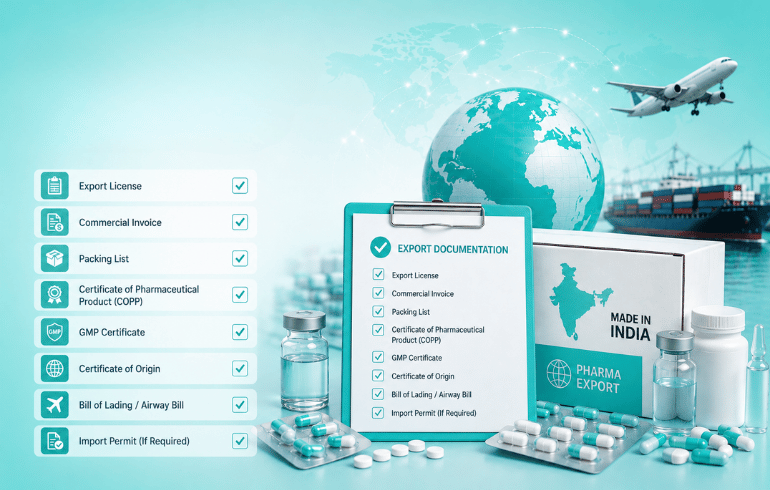
3. Complete Pharma Export Documentation Checklist
Pre-Export Documents
- Import Export Code (IEC)
- Drug Manufacturing License
- GMP Certificate
- COPP (Certificate of Pharmaceutical Product)
- Free Sale Certificate (FSC)
- Proforma Invoice
Shipping & Customs Documents
- Commercial Invoice
- Packing List
- Shipping Bill
- Bill of Lading / Airway Bill
- Export Declaration Form (EDF)
- Insurance Certificate
- Letter of Credit (LC)
Quality Compliance Documents
- Certificate of Analysis (COA)
- Batch Manufacturing Records (BMR)
- Stability Reports
- Shelf-life Certificate
Import Country Documents (Varies)
- Product registration dossier
- Regulatory approvals
- Label compliance certificates
- Import permits
4. Step-by-Step Process of Medicine Export from India
Step 1: Business Registration
Register as a proprietorship, partnership, or private limited company.
Step 2: Obtain IEC Code
Apply via DGFT portal.
Step 3: Obtain Drug License
Manufacturing or wholesale license from state drug authority.
Step 4: GMP Compliance
Ensure WHO-GMP certified production facility.
Step 5: Market Research & Buyers
Find international buyers through trade platforms and exhibitions.
Step 6: Product Registration
Register products in destination country if required.
Step 7: Documentation Preparation
Prepare all export and compliance documents.
Step 8: Customs Clearance
File shipping bill and clear goods through customs.
Step 9: Shipment & Payment
Ship via air/sea and receive payment via LC, advance, or agreed terms.
5. Key Regulatory Authorities in India
- DGFT – Export licensing and IEC
- CDSCO – Drug approvals
- DCGI – Central drug authority
- EIC – Export quality inspection
- Customs India – Shipment clearance
6. Common Challenges in Pharma Export
- Complex documentation requirements
- Different country-specific regulations
- Strict quality audits
- Packaging & labeling compliance issues
- Payment and currency risks
7. Tips for Smooth Pharma Export
- Maintain WHO-GMP compliance
- Use experienced freight forwarders
- Verify all documentation before shipment
- Stay updated with importing country rules
- Use secure payment methods like LC
- Register products early in target markets
8. Conclusion
Pharma export from India offers huge global business opportunities. However, success depends on proper documentation, regulatory compliance, and quality assurance.